I learned to play the guitar on a vintage nylon-string that the whole family shared. It wasn’t mine in any official sense. It lived wherever it landed — on the couch in the lounge, leaning against the piano, or resting on its stand like it was waiting for someone to notice it again. That accessibility mattered more than I realised at the time. You could just walk in, pick it up, and make a sound.
From about the age of 13, I started noodling on that guitar whenever there was a dull moment — which, in the late 90s, was often. This was long before smartphones filled every spare second. If the TV had nothing to offer, that was it. The internet existed, sure, but it hadn’t quite permeated the bottom end of Africa yet. Silence was still a thing. Boredom was still a thing. And out of that boredom came melodies.
By my late teens and early twenties, I was completely taken by acoustic songwriters and bands. I absorbed their sounds, their structures, their honesty, and tried — often clumsily — to emulate them. Acoustic music felt intimate and immediate. There was nowhere to hide, no distortion to mask a weak idea. Just wood, strings, voice, and truth.
Everything shifted in 2002.
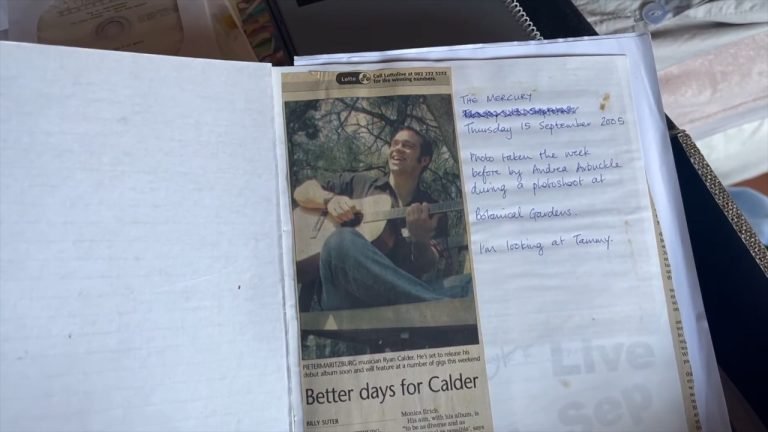
My dad returned from a trip to the US with my first real guitar: a Larrivée acoustic. I was 21 years old. That moment — the opening of the case, the smell of new wood, the unfamiliar weight of it in my hands — marked the beginning of a songwriting surge that would eventually lead to Better Days in 2005.
This wasn’t just another guitar. It was a fresh, crisp, recording-series instrument with no cutaway on the body. It felt serious. It sounded serious. And the most remarkable thing was how little effort it took to get a beautiful tone out of it. You didn’t have to fight it. You barely had to think. You just played — and suddenly the sound filled the room.
That openness unlocked something in me.
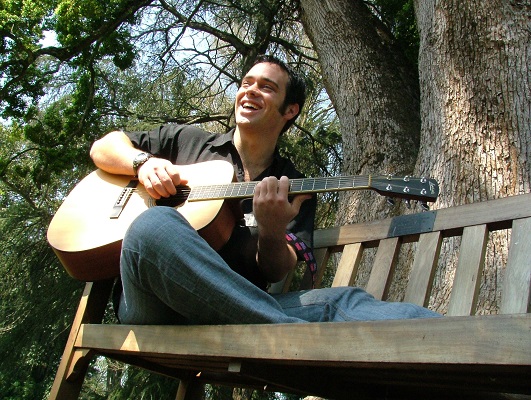
With that guitar came words and phrases, ideas that seemed to arrive fully formed. Thanks To You was one of the first songs born from that season. It poured out naturally, like it had been waiting for the right instrument to give it permission.
The opening lines captured exactly how I was feeling at the time — a sense of renewal, of stepping into something lighter after years of quiet internal struggle:
Top of the morning it’s a brand new day
There’s just so much that I’d like to say
Yesterday’s gone and I remember
When everything went wrong
But today I’m brand new
Looking back, those lyrics feel like a young man standing at the edge of adulthood, realising that the past doesn’t get to define the future. There’s an innocence there, but also a deep relief.
As the song unfolds, it becomes more embodied — more aware of the physical world, the breath in the lungs, the space above and below:
I’m breathing air I didn’t notice before
The earth and sky never looked so good before
I’m alive, feel reborn
No longer forlorn
And it’s all because of you
That sense of gratitude is the heart of the song. Thanks To You isn’t about a single person in a literal sense. It’s about the presence — divine, relational, inspirational — that pulls you out of yourself and reminds you that life is good, even when it hasn’t always been.
The chorus distils that revelation into its simplest form:
And suddenly I found that I’m okay
I’m looking at the world a different way
Thanks to you
By the time the song reaches its final verse, it leans fully into trust and surrender — the idea that freedom comes from believing the promise rather than doubting it:
You say jump and I’ll ask how high
Today I feel like I can touch the sky
Free at last I’m free
Just like you promised me
And I feel like life is good
When I recorded Better Days in 2005 — self-recorded at Hilton College — it felt right that Thanks To You opened the album. It set the tone not just musically, but emotionally. This was where the journey began: with gratitude, with openness, and with a guitar that changed everything.
Even now, years later, that song still reminds me of what it feels like when creativity flows freely — when you pick up an instrument, do very little, and somehow receive so much in return.